
Quran information
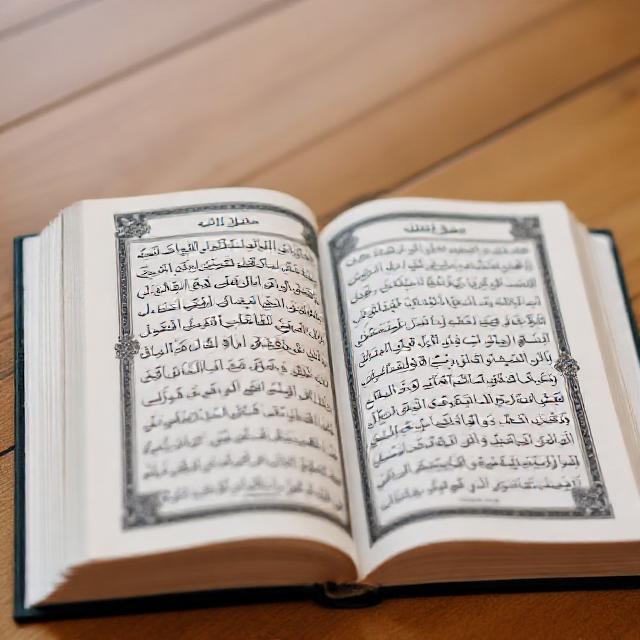
The Qur’an is the final revelation from Allah, sent as a complete and perfect guidance for all of humanity. It is not just a religious book for Muslims but a comprehensive manual for life. From belief and worship to family life, social justice, ethics, and personal development, the Qur’an speaks to the mind, the heart, and the soul.
1. What Is the Qur’an?
The Qur’an is the word of Allah, revealed in Arabic to the Prophet Muhammad (ﷺ) over a period of 23 years through the Angel Jibreel (Gabriel). It is:
-
Revelation (Wahy) – not written by humans
-
Preserved – memorised and recorded from the time of the Prophet (ﷺ)
-
Universal – for every nation, every time, and every place
Muslims believe that no other book will come after the Qur’an. It completes the chain of revelation sent earlier to prophets such as Ibrahim (Abraham), Musa (Moses), and Isa (Jesus), peace be upon them all.
2. How Was the Qur’an Preserved?
From the very beginning, the Qur’an was:
-
Memorised by companions of the Prophet (ﷺ)
-
Written on materials like parchment, leather, bones and later compiled
-
Recited regularly in prayers and gatherings
After the passing of the Prophet (ﷺ), the first caliph Abu Bakr (ra) initiated the first formal compilation, and during the caliphate of Uthman (ra), standard written copies were made and distributed to different regions. Because of this early and careful preservation, the Qur’an we recite today is the same as the one recited 1400+ years ago.
3. Structure of the Qur’an
The Qur’an has:
-
114 Surahs (chapters) – some long, some very short
-
Ayahs (verses) inside each surah
-
The surahs are not arranged in order of revelation, but in a divine sequence that Muslims follow today.
Some chapters were revealed in Makkah (focusing mainly on faith, belief, and morality) and others in Madinah (focusing on laws, community life, and social issues).
4. Major Themes of the Qur’an
The Qur’an covers many topics, but some of its main themes include:
a) Belief in Allah and the Hereafter
The Qur’an explains who Allah is – His Oneness, His attributes, His mercy, and His justice. It reminds us that life in this world is temporary and that we will return to Allah for accountability.
b) Prophets and Stories
The Qur’an shares the stories of many prophets like Nuh (Noah), Ibrahim, Musa, Yusuf (Joseph), and others. These are not just stories, but lessons about patience, trust in Allah, and standing firm on truth.
c) Worship and Spirituality
The Qur’an teaches us how to worship Allah through salah (prayer), fasting, charity, and remembrance. It connects worship with real life, showing that true faith must be seen in our character and actions.
d) Morals and Good Character
Kindness, honesty, forgiveness, fairness, patience, and humility are repeatedly encouraged. The Qur’an teaches that good character is a sign of strong faith.
e) Family and Society
Guidance is given on marriage, parenting, inheritance, dealing with parents, neighbours, orphans, and the poor. The Qur’an builds a balanced, just, and caring society.
5. How Can We Build a Connection with the Qur’an?
For many Muslims, the challenge is not just to own a Qur’an, but to live with it.
Here are simple practical steps:
-
Read a little every day, even 1–2 pages
-
Try to read with translation in a language you understand
-
Reflect: “What is Allah teaching me here?”
-
Act on small things: a reminder about kindness, patience, truthfulness
-
Listen to Qur’an recitation to soften the heart
-
Join study circles or classes that explain the Qur’an
6. The Qur’an as Personal Guidance
The Qur’an is not only for scholars or imams. It is for every Muslim:
-
A source of comfort in sadness
-
A reminder during success
-
A healer for spiritual emptiness
-
A light when life feels confusing
When a person makes the Qur’an part of their daily life, they begin to see its wisdom in every situation. It shapes how they think, feel, and make decisions.
Conclusion
The Qur’an is a living guide, not a book to be kept on a shelf. It calls us to know Allah, to improve ourselves, to care for others, and to prepare for the Hereafter. When we recite it, understand it, and try to live by it, the Qur’an transforms our hearts and our lives.